
 Continue with Google
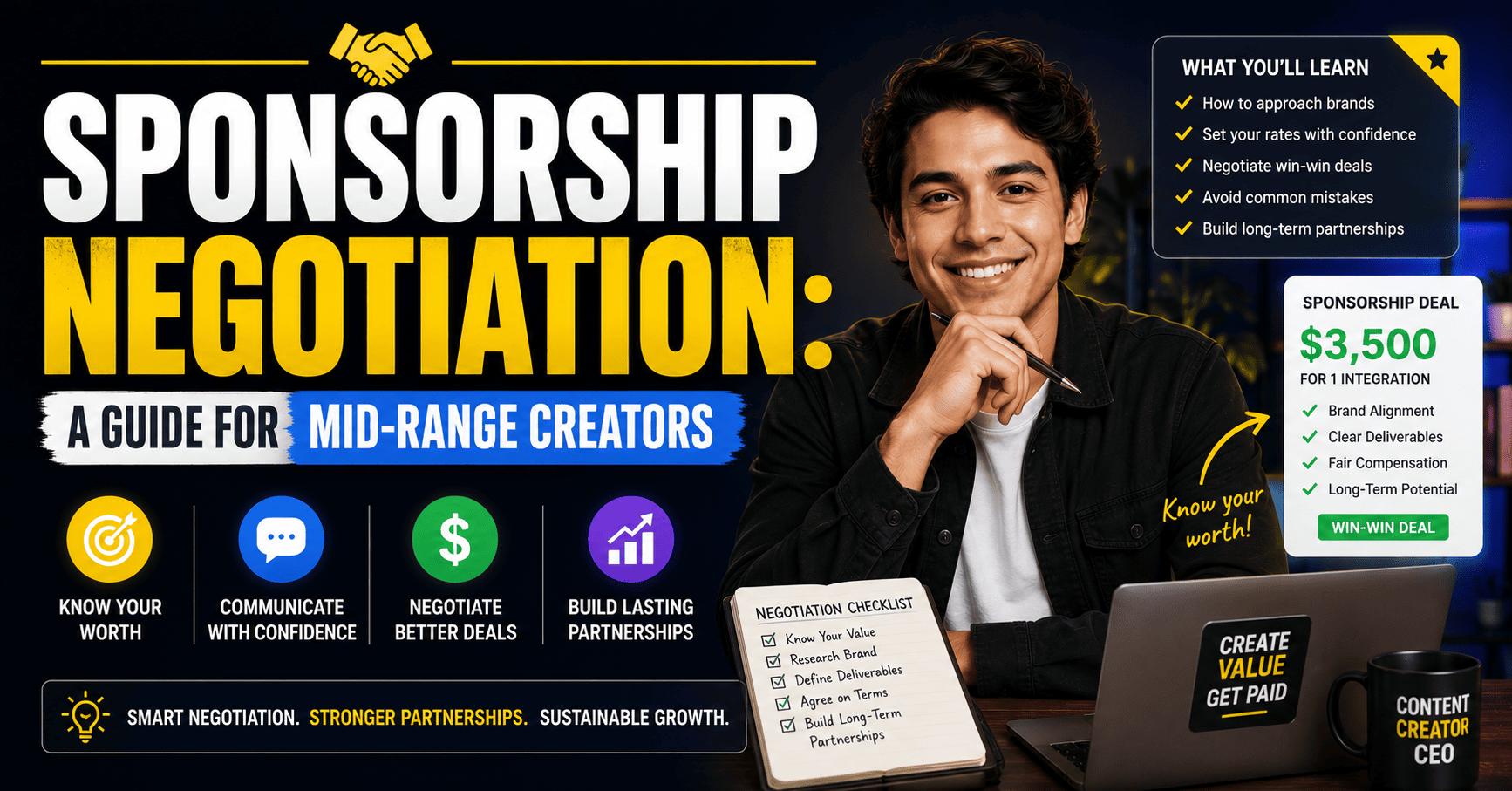
Sponsorship Negotiation: A Guide for Mid-Range Creators
Mid-range creators sit in a strange position.
You’re no longer a beginner chasing free products, but you’re also not a celebrity creator commanding six-figure campaigns.
That middle stage can feel frustrating.
Brands often underestimate your value. Negotiations feel awkward. And many creators accept low-paying deals simply because they fear losing opportunities.
But here’s the reality in 2026:
Mid-range creators are becoming some of the most valuable partners in the creator economy.
Why?
Because brands increasingly care more about:
audience trust,
engagement quality,
and conversion potential
than massive follower counts.
That creates a huge opportunity for creators who know how to negotiate strategically.
This guide breaks down how mid-range creators can negotiate sponsorships confidently, increase deal value, and position themselves like premium business partners instead of “just influencers.”
Why Mid-Range Creators Are More Valuable Than Ever
Brands are shifting away from vanity metrics.
Large influencers often generate:
weaker engagement,
inflated audiences,
and lower conversion efficiency.
Meanwhile, mid-range creators usually have:
stronger audience relationships,
higher trust,
and more niche authority.
The Trust Advantage
A creator with:
80,000 highly engaged followers
can outperform:a creator with 2 million passive followers.
That’s because modern consumers respond better to authenticity than celebrity-style promotion.
Brands know this.
And that gives you leverage.
The P.R.I.C.E Framework for Sponsorship Negotiation
Most creators negotiate emotionally.
Professionals negotiate strategically.
To improve sponsorship outcomes, use what I call the P.R.I.C.E Framework.
P — Position Yourself as a Business
The fastest way to lose negotiation power is acting overly grateful for every opportunity.
Mid-range creators often say:
“I’d love to collaborate!”
“I’m excited to work with your brand!”
That language creates weak positioning.
Instead, approach negotiations like a media business.
Better Positioning Example
Instead of:
“Thanks for reaching out. What’s your budget?”
Say:
“I reviewed your campaign goals and believe my audience aligns strongly with your target demographic.”
That sounds more strategic immediately.
R — Research Before Discussing Rates
Never quote pricing blindly.
Strong negotiators research:
the brand,
campaign objectives,
previous sponsorships,
and audience alignment first.
Understanding the company’s goals helps you negotiate from value instead of guessing.
Questions Smart Creators Ask
Is this a conversion campaign or awareness campaign?
Will the content be repurposed for ads?
Are exclusivity terms included?
Is there long-term partnership potential?
These details dramatically affect pricing.
I — Increase Perceived Value
Mid-range creators often undercharge because they focus only on follower count.
Brands care about outcomes.
High-Value Metrics Include:
engagement rate,
click-through rates,
audience retention,
niche authority,
and purchase behavior.
If your audience trusts your recommendations, your value rises significantly.
Example
A creator with:
4% conversion-focused engagement
is often more profitable than:a larger creator with weak audience trust.
Position your influence around:
results,
not popularity.
Why Deliverables Alone Are a Mistake
Many creators negotiate like this:
“One reel costs $500.”
That’s too simplistic.
Professional negotiations consider:
usage rights,
exclusivity,
ad licensing,
revisions,
and campaign duration.
The Hidden Money Is in Licensing
If a brand wants to run paid ads using your content:
charge more.
If they want exclusivity:
charge more.
If they want extended usage rights:
charge more.
Many creators unknowingly give away thousands of dollars in value because they only price the post itself.
How to Handle Pricing Conversations
Pricing conversations intimidate many creators because they fear rejection.
But negotiation is normal.
Brands expect it.
The Premium Anchoring Strategy
Instead of quoting your minimum acceptable rate:
start higher.
This creates negotiation room while protecting your value.
Example
Instead of:
“My rate is $1,500.”
Say:
“Campaign pricing typically ranges between $2,000–$3,500 depending on usage rights and deliverables.”
This frames your work professionally instead of emotionally.
Red Flags Mid-Range Creators Should Avoid
Not every sponsorship is worth accepting.
Some deals damage:
audience trust,
positioning,
and long-term growth.
Warning Signs
1. Unlimited Usage Rights
Brands using your content forever without additional payment is a major red flag.
2. Excessive Revisions
Too many revision requests often signal difficult clients.
3. “Exposure” Offers
Exposure rarely pays bills in 2026.
4. Unrealistic Deliverables
Some brands demand:
multiple videos,
reposts,
stories,
and editing rights
for low budgets.
Know your boundaries.
Why Long-Term Sponsorships Matter More
One-off campaigns create inconsistent income.
The smartest mid-range creators focus on recurring partnerships.
Benefits of Long-Term Deals
Long-term sponsorships provide:
stable revenue,
better audience trust,
easier negotiations,
and stronger performance data.
Brands also prefer long-term creators because repeated exposure improves campaign results.
The Future of Creator Sponsorships
Creator sponsorships are becoming more sophisticated every year.
Brands increasingly treat creators like:
media partners,
distribution channels,
and customer acquisition systems.
This benefits mid-range creators tremendously because niche authority is becoming more valuable than mass reach.
What Brands Want in 2026
Brands now prioritize:
authenticity,
audience quality,
retention,
and conversion efficiency.
That means smaller creators with strong communities can negotiate far stronger deals than before.
Final Thoughts
Mid-range creators are in one of the strongest positions in the creator economy right now.
You’re large enough to influence buying decisions, but still trusted enough to feel authentic.
That combination is incredibly valuable.
The key is learning to negotiate like a business owner instead of a content hobbyist.
Focus on:
positioning,
leverage,
audience trust,
and long-term partnerships.
Because sponsorship negotiation is no longer just about content creation.
It’s about understanding your role in modern marketing.
And creators who understand that shift will continue increasing both their rates and their influence in 2026 and beyond.
FAQ: Sponsorship Negotiation for Mid-Range Creators
What is considered a mid-range creator?
Mid-range creators typically have between 10,000 and 250,000 followers with solid engagement and niche authority.
How much should mid-range creators charge for sponsorships?
Rates vary based on engagement, niche, platform, and deliverables, but many creators charge anywhere from several hundred to several thousand dollars per campaign.
Should creators negotiate sponsorship rates?
Yes. Most brands expect negotiation, especially for usage rights, exclusivity, and additional deliverables.
What is the biggest sponsorship negotiation mistake?
Undervaluing audience trust and accepting deals based only on follower count.
Why are long-term sponsorships better?
Long-term deals create recurring revenue, stronger brand relationships, and more authentic audience integration.
Should creators accept free product deals?
Free products can work early on, but established mid-range creators should prioritize paid partnerships whenever possible.